


Understanding the 360-degree customer view with predictive insights


The order history resides in the CRM or ERP system. Support requests are recorded in a helpdesk tool. The information is fragmented, making it difficult to obtain a complete picture of the customer.
For example, imagine you run an online shop. A customer buys from you regularly. You have their purchase history in your CRM. They've also opened your recent emails, which is recorded in your email platform. You can also see that they've viewed items on your website and saved them as favorites. Last week, they inquired about a return. This conversation is stored in your helpdesk system. Nowhere can you see all of this information together. This makes it difficult to understand who this person really is and how to better assist them.
This is where the idea of consolidating all data into a single customer view comes in. Traditionally, a Single Customer View or 360-degree customer view is described as a comprehensive approach. Data from various touchpoints is gathered into a single profile. The goal is to store all interactions in one place. This information should be accessible to the entire team, whether support, sales, or marketing. Everyone works with the complete picture.
☝️ We prefer the term "a customer view" here. Later, we'll explain why we define a 360-degree customer view somewhat differently. It's not just about having all the data in one place. It's also about enriching it with predictive insights.
What is the Single Customer View?
When we talk about a single customer view, we usually mean descriptive data. This is data that helps to identify and understand a person. This includes:
- favorite products
- Order history
- Communication preferences
- Support history
- Interesting categories
You can use some of this data immediately in your strategy. You can segment your customers. This will allow you to better tailor your messaging.
For example: A customer often buys baby products and usually shops on weekends. You can categorize them as young parents. Then you send them relevant offers on Friday evening. That's the time when they're most likely to respond.
This type of data shows what the customer has already done. It represents their previous interactions with your brand. It forms the basis for advanced views such as the 360-degree customer view.
360-degree customer view + predictive insights
Collecting data and having a single customer view is a big step. But technology and AI are evolving. Storing data is no longer the end goal; it's just the beginning. You can now use that data to gain predictive insights.
Big brands like Netflix and Amazon have been doing this for years. They use data to predict customer needs. They know how customers behave and when they might churn. Previously, this required huge budgets. Today, this capability is also accessible to smaller companies.
In this phase, we don't just ask about the past. We want to know what the customer is likely to do next.
- Will the customer buy again or not?
- Is he about to switch to the competition?
- Which channel is best for him right now?
- What discount should we offer next?
How does this relate to the 360-degree customer view? An example will help explain this best. Look at the data of a pet store. There are columns that describe each customer. These come from your CRM or shop system.
This data tells us:
- Customer ID
- Lifecycle status (new customer, existing customer, ambassador or churned)
- Time of last interaction (days since last purchase)
- Purchase frequency (How often were purchases made)
- Pet types (cat, bird, dog)
These are historical attributes. They help us understand past behavior.
With predictive analytics, however, we look ahead. We can generate data that predicts future behavior. For example:
Personalized discount: Predicting which discount a customer is most likely to use, while taking the costs for the company into account.
Future NPS: We can predict whether a customer will become a promoter or a critic. This allows us to address them appropriately.
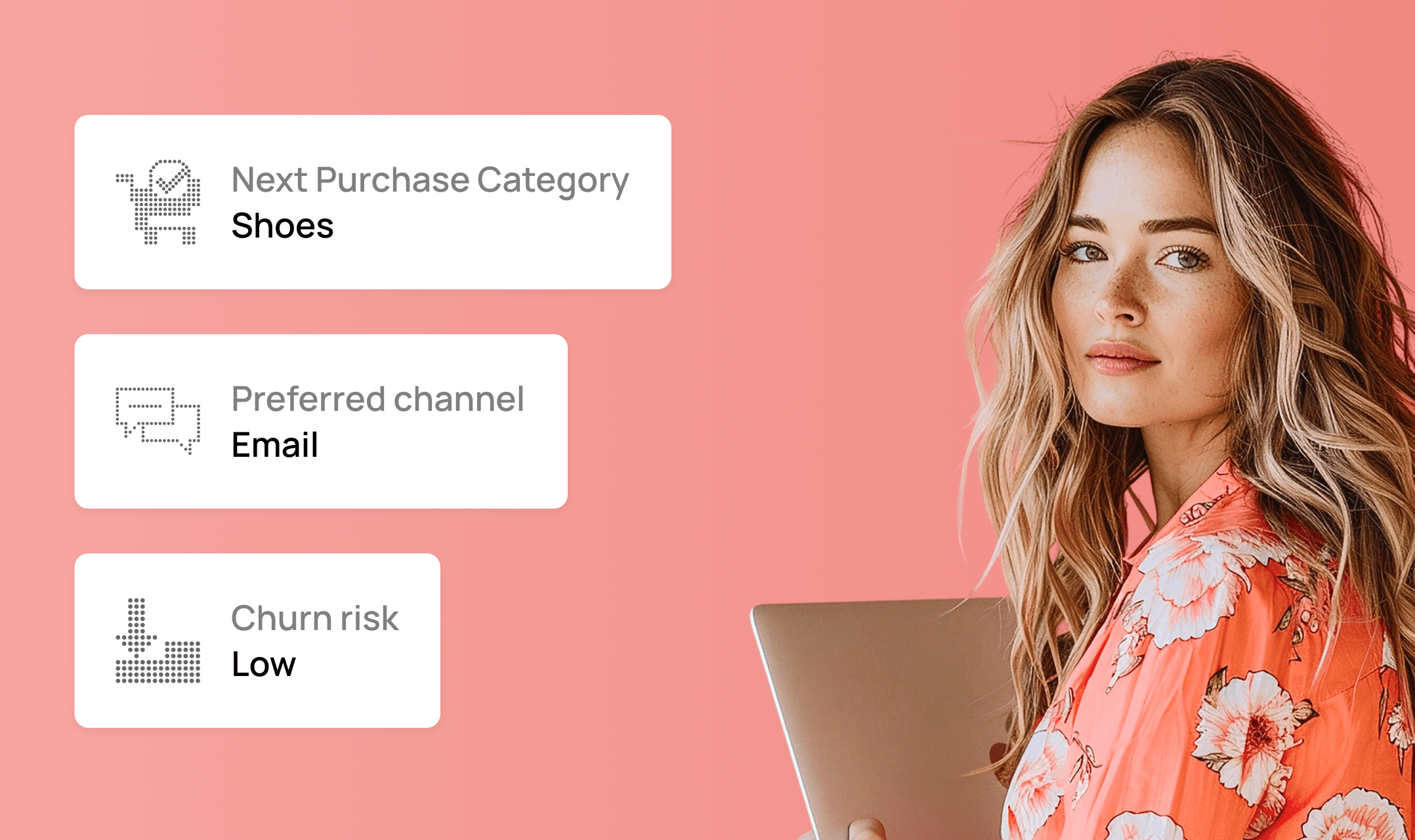
Preferred channel: Predicting whether email, push notification, or phone call will be most effective.
Next purchase category: Predicting which products the customer is likely to buy next. For example, food, toys, or vitamins.
We no longer just react to what has happened. We take proactive action before a problem arises.
Let's take the pet store example again. A customer typically buys dog food every month. We don't wait until they skip a month. Predictive data identifies the risk of customer churn immediately after a purchase. This allows us to intervene early.
We can say: This customer is at high risk of leaving. We'll act now. We'll send a message with a suitable offer or discount. This proactive approach helps retain customers. It often costs less than winning back a lost customer.
What predictive insights are available in a 360-degree customer view?
Predictive analytics is a broad field. Data professionals have long been gaining valuable insights from customer data. Which predictions are important for your business depends on your goals. Here are the most common examples:
1. Churn Risk
Churn means that customers end their relationship with your company.
Key questions: Will the customer churn in the next few days? What is the probability? What factors influence this?
2. Upsell and cross-sell potential
This is about the probability that a customer will spend more, either in the same categories (upsell) or in new ones (cross-sell).
How likely is a customer to try new categories? What factors influence this behavior?
3. The next best offer (Next Best Offer)
Here we are looking for the optimal incentive for the customer.
How likely is the customer to take advantage of a particular offer? Which discount or marketing strategy works best? What financial impact can we expect?
4. Customer Lifetime Value (CLV) Forecast
Here we predict how much revenue a customer will generate over a specific period. This is an advanced prediction. It becomes possible when you collect enough data.
How much revenue is this customer likely to generate in the coming months? What factors will increase this figure? This will help you prioritize your marketing activities.
What data is used for training models?
To make predictions, you need solid data to train the models. Machine learning often recognizes complex patterns better and faster than humans. Here is a list of possible data sources:
Historical customer activity: CRM interactions, purchase history, email campaigns, support logs.
Customer feedback: Surveys, ratings, and qualitative feedback.
Loyalty programs: Points collected, rewards used, purchase frequency.
Product data: Interactions within the app, behavior on the website, and functions used.
Engagement data: Email open rates, newsletter subscriptions, website clicks.
External sources: Weather data for seasonal products, economic trends, or competitor activities.
Using different datasets improves the accuracy of the models. This enables personalized customer communication and better decisions.
Conclusion
A 360-degree customer view means more than just collecting data. It's about understanding your customers' needs before they even express them. With predictive insights, you shift from reacting to proactively acting.
Imagine knowing exactly which discount will motivate a customer to make their next purchase. With predictive analytics, you can act immediately. This makes your customers feel valued.
Ultimately, this approach helps you build deeper relationships. You keep customers happy for longer and increase your success. It's about using data to create genuine connections.
