


Book your personalized demo
See what your data can do for
Your company can do
Your company can do
Learn how to get started and what results you can expect.
Contact us


The company is an established provider with over 70,000 subscribers. With an annual churn rate of 15%, it was essential to protect revenue from existing customers.
The biggest challenge was timing. Contacting a customer during the termination meeting is usually too late. Trust is often already lost, and discounts are of little help. The company had to find dissatisfied customers while they could still be retained.
The project began with the collection of all customer information in one place. This included payment history, technical logs, and support call records. We linked data that was previously stored in different departments. This enabled a unified view of each subscriber's experience over time.
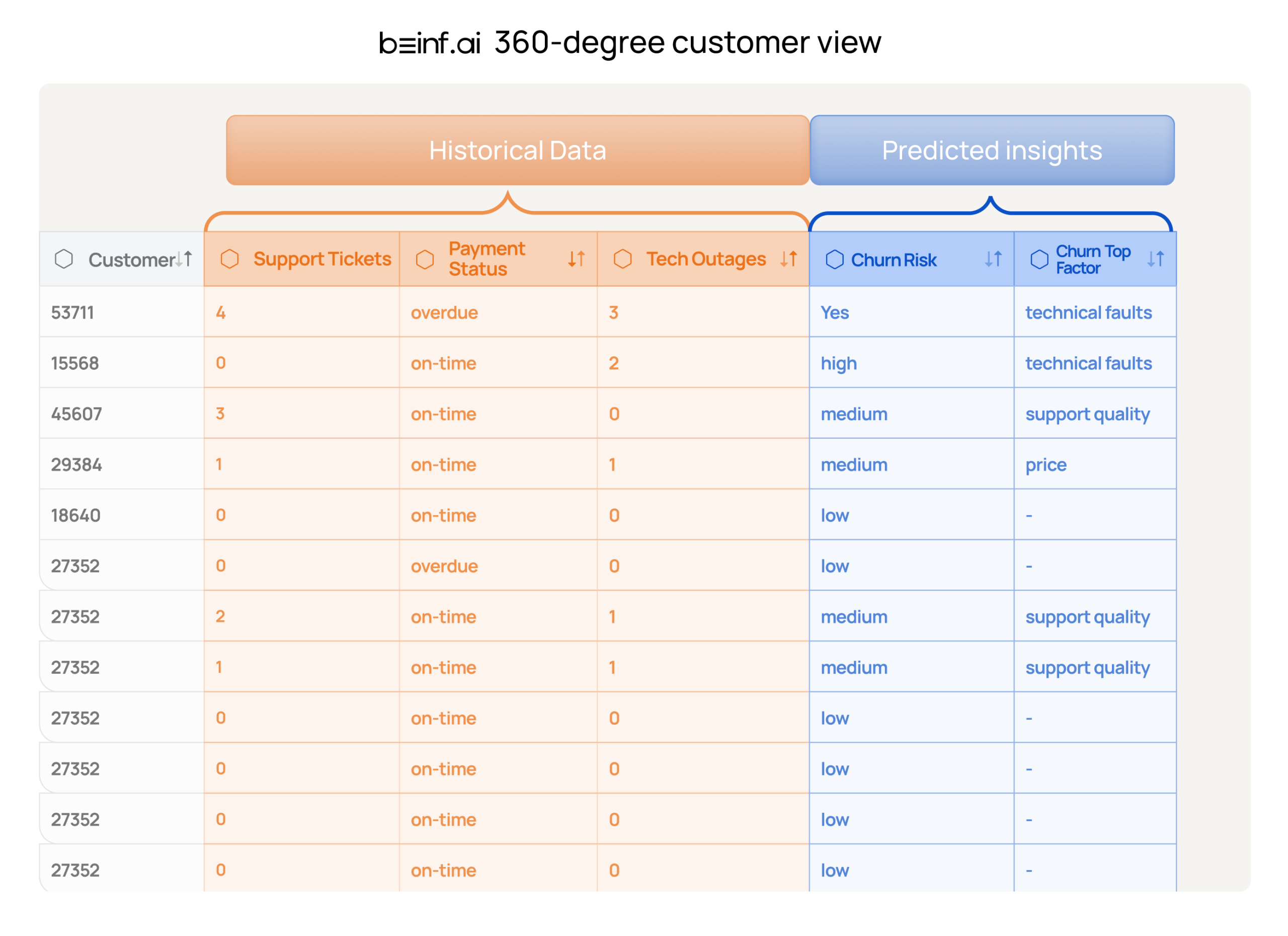
We searched the data for patterns preceding a cancellation. Examples included decreasing internet speed or sudden changes in payment behavior. These signs were often too subtle for manual detection.

We used thousands of examples of customers who had already left. The system learned the patterns of these departures. Now every subscriber receives a risk score. This allows for predictions even before a formal complaint is filed.
The team receives a weekly list of at-risk customers. They proactively call and offer direct solutions. Technical errors are fixed or better tariffs are offered. This approach turns a cancellation into a positive experience.