

Book a personalized demo
See what your data can do for your
Companies can do.
Companies can do.
Learn more about the start and the results
Contact us


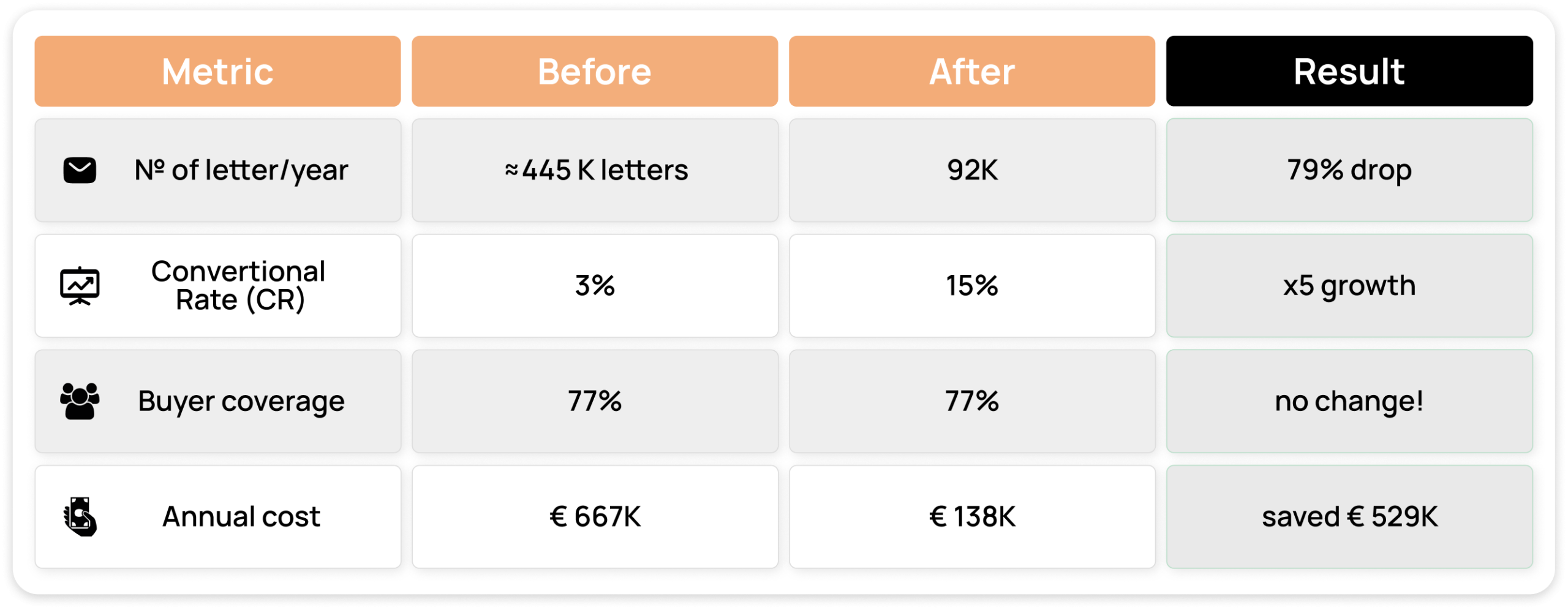
The company is an established Swiss furniture retailer. It sent out approximately 445,000 letters annually. At a cost of €1.50 per letter, the budget reached €667,000. Furniture is rarely purchased, which explains the low conversion rate.
The company sent letters to all customers, even though only a few actually made a purchase. Sending a letter to someone with no need is a waste of money. Simply shortening the list was too risky. The company needed a data-driven approach.
First, we gathered all available customer data in one place. This included purchase and communication history (which mailings each customer received and whether there was a response). We organized everything so that we could track all of each customer's activity over time.
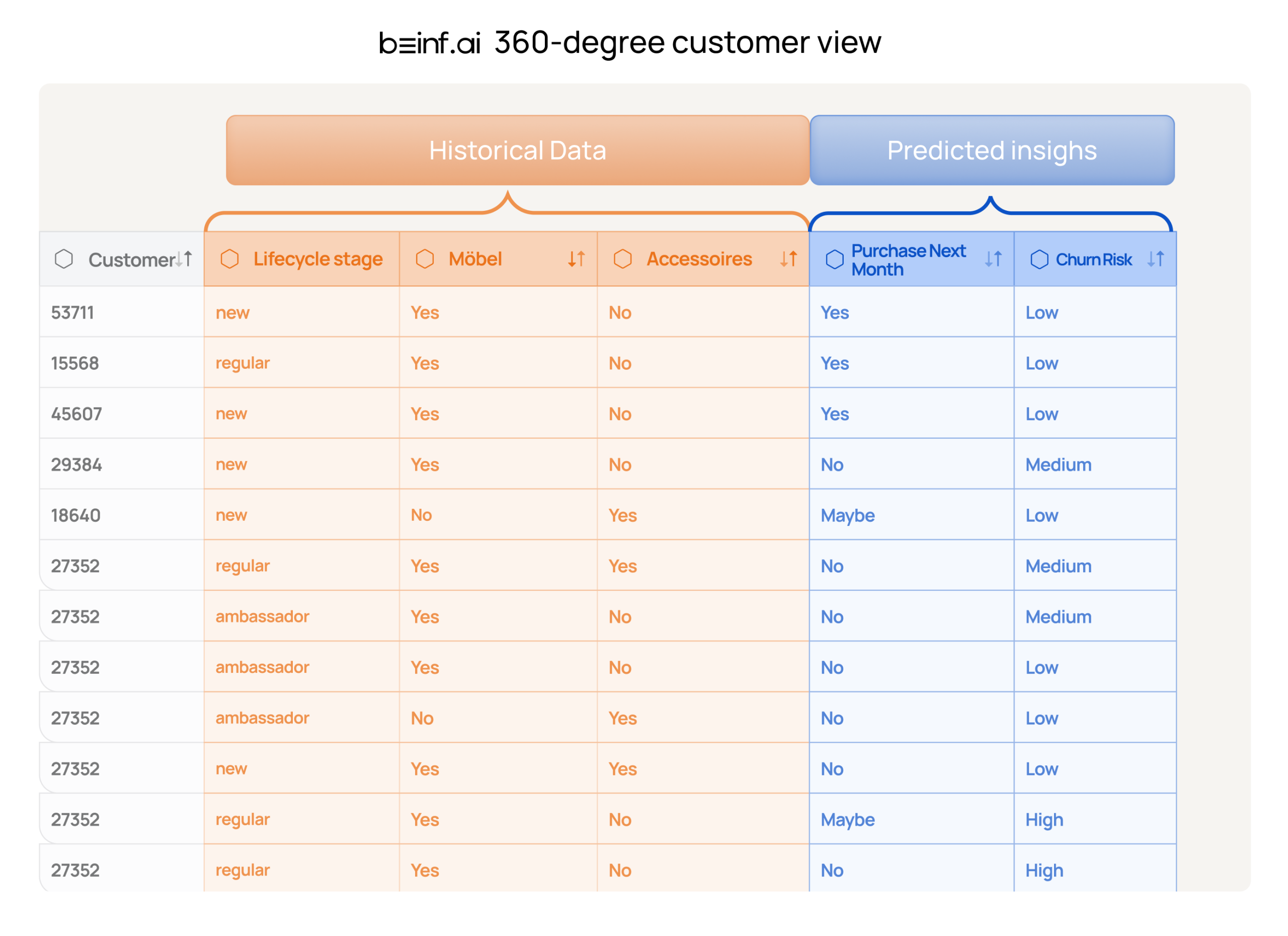
For each customer, we calculated simple indicators that describe their purchasing behavior.
These indicators help the model understand the difference between active and inactive customers.
We trained the model to answer one question: Will this customer buy something in the next 3 months?
We opted for 3 months because people rarely buy furniture. Looking at a shorter period like one month, almost no one buys anything. There isn't enough data to learn from it. Three months provides the model with enough examples of actual purchases to identify patterns.
The original idea was to find 1,000 to 3,000 customers who would definitely buy and focus on them. But an honest data analysis revealed a different picture.
With a customer base of 105,000, the proportion of those who will buy in the short term is very small. Behavioral signals were limited and essentially restricted to purchase history. Therefore, it was statistically difficult to reliably determine who in the range of 1,000 to 3,000 people would buy.
Initially, we tried to identify the 1,000 most likely buyers. However, the data showed that it is difficult to accurately predict who the buyers will be. will The purchase is difficult because behavioral signals are only available to a limited extent.
We have changed our strategy to excluding non-buyers. Although finding buyers is difficult, the model identified individuals with no purchase intent with an accuracy of 99%. By selectively removing these inactive segments, we were able to significantly reduce the size of the mailing list.
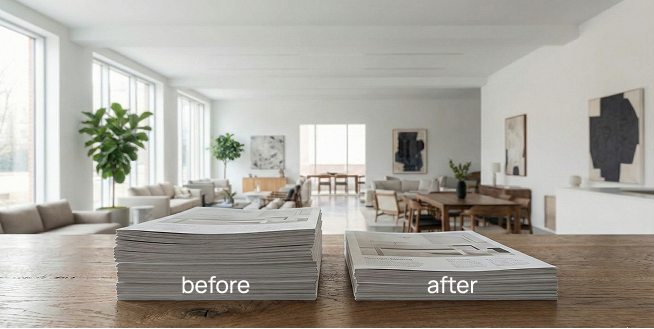
We removed inactive customers from the mailing list. Now, only customers who have shown potential interest receive a letter. The next campaign reduced the number of letters sent from 105,000 to just 20,000.