

Book personalized demo
See what your data can do
for your business
for your business
Find out how to get started and what results to expect
Contact us


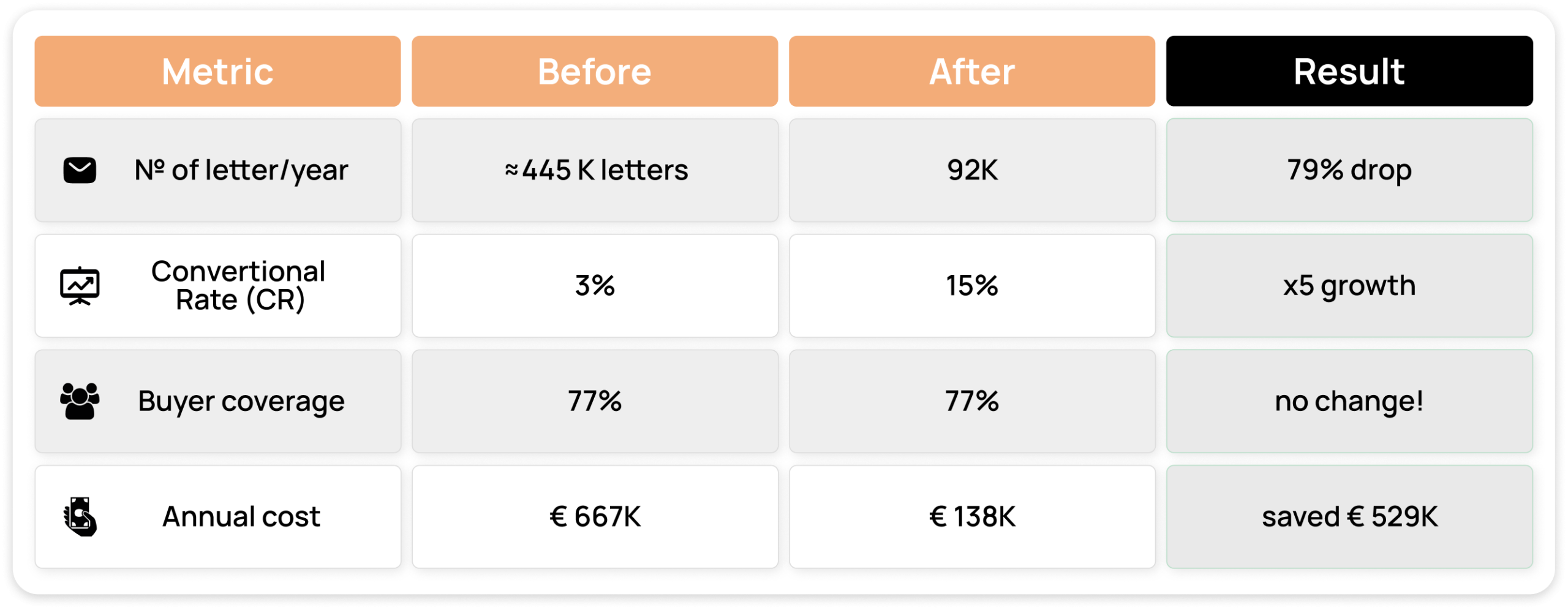
The company is an established Swiss furniture retailer with a customer base of over 105,000 contacts. Like many traditional retailers, they relied on offline marketing. They sent regular paper mailings including catalogs, promotional offers, and seasonal campaigns. Every year the company sent about 445,000 letters. That is roughly 9 campaigns per year, each reaching almost the entire database. At €1.50 per letter, the annual mailing budget reached €667,000.
The challenge is that furniture is not a fast-moving consumer good. People buy a sofa or a wardrobe once every few years, not every month. So conversion from mass mailings was low at around 1.2%.
The company was sending letters to all 105,000 customers even though only a small percentage actually bought anything. In furniture retail, the purchase cycle is long. A customer might be loyal to the brand but simply not need new furniture this year. Sending them a letter is a wasted €1.50.
Simply cutting the mailing list was risky. You might remove someone who was actually planning to buy. The company needed a way to distinguish between quiet loyal customers and those who definitely would not buy anytime soon. And they needed to do this based on data, not intuition.
First, we gathered all available customer data into one place. This included purchase history and communication history (which mailings each customer received and whether there was any response). We organized everything so we could see each customer’s full activity over time.
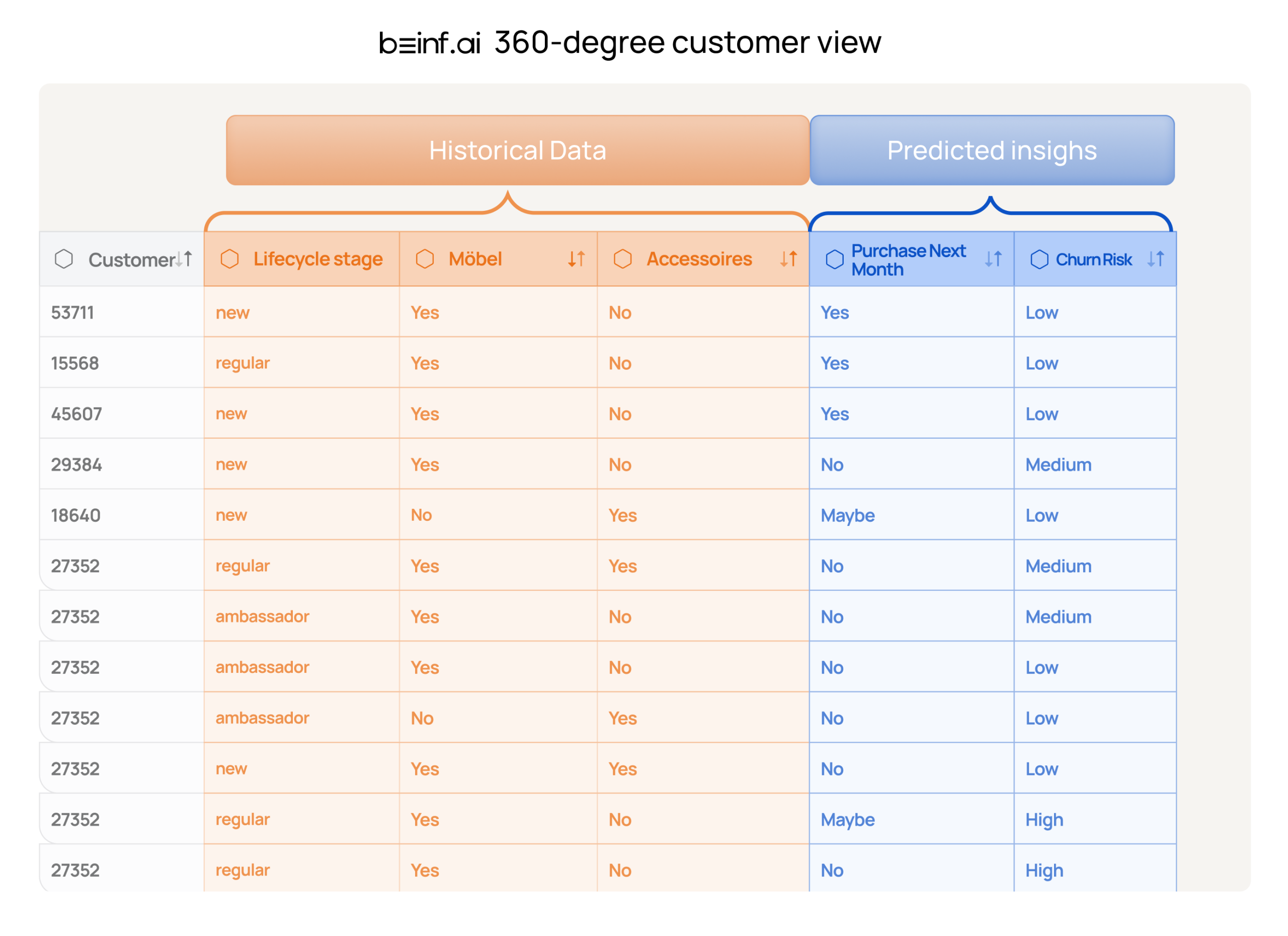
For each customer we calculated simple indicators that describe their shopping behavior.
These indicators help the model understand the difference between active and inactive customers.
We trained the model to answer one question: will this customer buy something in the next 3 months?
We chose 3 months because people buy furniture rarely. If you look at a shorter period like one month, almost nobody buys anything. There is not enough data to learn from. Three months gives the model enough examples of actual purchases to find patterns.
The initial idea was to find 1,000 to 3,000 customers who would definitely buy and focus on them. But honest analysis of the data showed a different picture.
With a base of 105,000 customers, the share who will buy in any short period is very small. Behavioral signals were limited, essentially just purchase history. So reliably identifying “who will buy” at the level of 1,000 to 3,000 people was statistically difficult.
Initially, we tried to find the 1,000 most likely buyers. However, the data showed that predicting exactly who will buy is difficult because behavioral signals are limited.
We changed the strategy to excluding non-buyers. While finding a buyer is hard, the model was 99% accurate at identifying people who had no intention of buying. By focusing on removing these cold segments, we could safely reduce the mailing list.
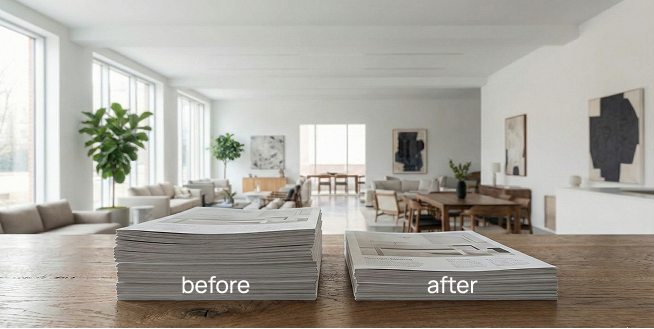
We removed the cold segment from the mailing list. Now, only customers who show a potential signal of interest receive a letter. The next campaign dropped from 105,000 letters to just 20,000.