for your business
How Predictive Analytics Helped an Electronics Retailer Detect Bonus Abuse
Business
The company operates a network of online and offline electronics stores and runs a loyalty program where customers earn bonuses for purchases and later use them to pay for products. Any abuse of this program creates direct financial losses and distorts loyalty analytics
Problem
The main challenge was inefficiency in fraud detection. Each month, the security team manually selected and reviewed more than 200 transaction videos based on internal rules and intuition. Only 5 to 10 percent of these reviews resulted in confirmed fraud.
The process consumed significant time and still missed many fraud cases. The company needed to reduce the number of transactions reviewed without reducing the absolute number of detected fraud incidents, and ideally to detect a larger share of them.
Solution
Step 1: We consolidated historical data
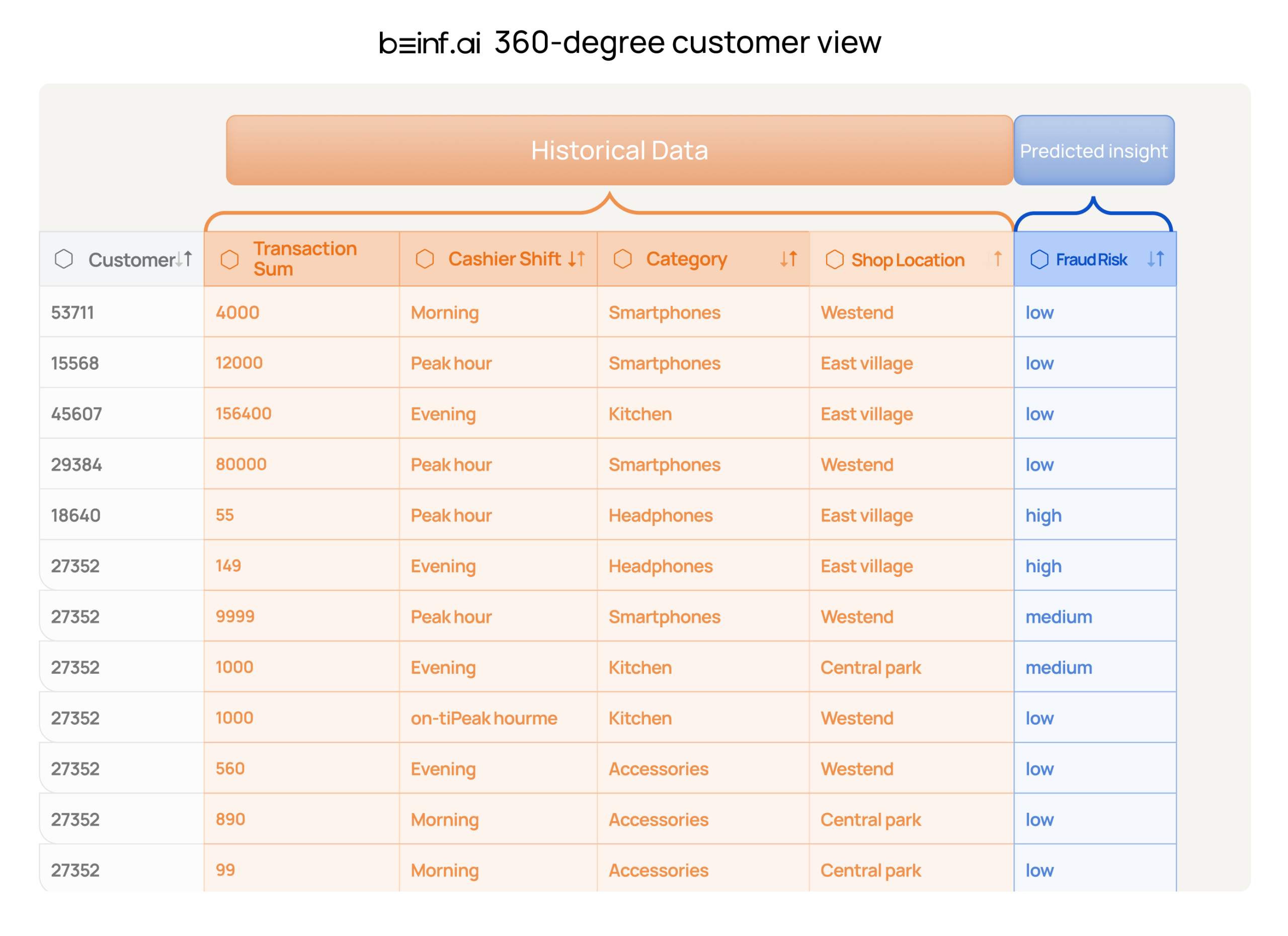
We brought together data that had previously been stored in separate systems. This included transaction details such as amounts, products, payment methods, bonus usage and returns. We also integrated loyalty card activity, including bonus accumulation and redemption patterns, as well as data on cashiers, stores, locations and time patterns.
Step 2: Created a labeled training dataset
We used the security team’s past review decisions as examples for the system to learn from. For each reviewed transaction, we recorded whether it was confirmed as fraud or not fraud based on video checks and internal rules. These examples showed the system what patterns usually lead to bonus abuse.
Step 3: Trained a fraud scoring model
We trained a model to estimate the probability that a transaction follows the bonus abuse pattern. The goal was to detect cases where a cashier uses their own loyalty card or a related card to collect bonuses and later spend them. The output is a ranked list of transactions, so the security team reviews the highest risk cases first.
Step 4: Optimized for limited historical data
Because there were not many past confirmed cases to learn from, we did not aim to replace manual investigations. We focused on producing the best top list for review, so the team could confirm more fraud with less effort. Each completed review adds new confirmed examples, which helps the system become more accurate over time.
Results
- 50 – transactions reviewed per month instead of more than 200.
- 70% – of reviewed transactions confirmed as fraud.
- 35 – confirmed fraud cases out of 50 reviewed transaction videos.
- 25 – hours saved per month by reducing manual reviews from more than 200 transactions to 50.
The security team now reviews fewer transactions while identifying more fraud cases, which saves time and speeds up investigations. Each review adds new labeled examples, allowing the fraud dataset to grow faster. Over time, this improves both the accuracy and coverage of the scoring model.
for your business