

Personalisierte Demo buchen
Sieh, was Deine Daten für Dein
Unternehmen tun können.
Unternehmen tun können.
Erfahre mehr über den Start und die Ergebnisse
Contact us


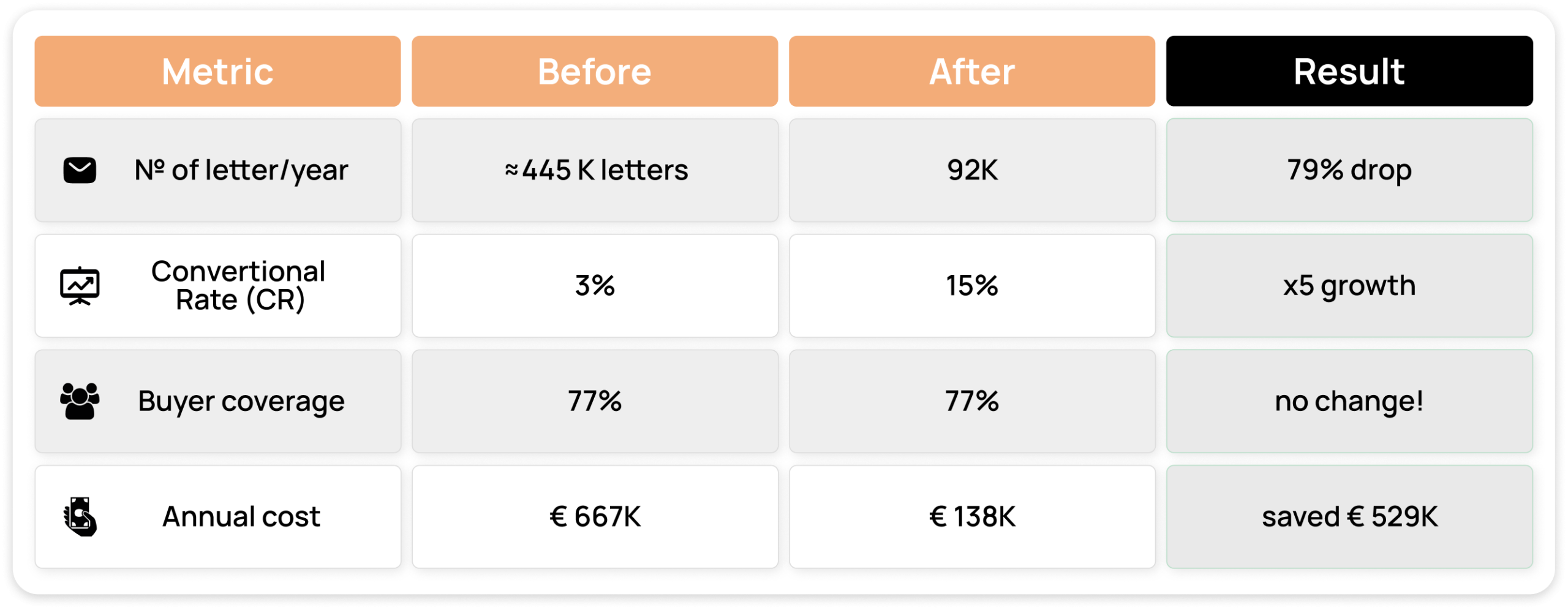
Das Unternehmen ist ein etablierter Schweizer Möbelhändler. Es verschickte jährlich etwa 445.000 Briefe. Bei Kosten von 1,50 € pro Brief erreichte das Budget 667.000 €. Möbel werden selten gekauft, was die geringe Konversionsrate erklärt.
Das Unternehmen schickte Briefe an alle Kunden, obwohl nur wenige tatsächlich kauften. Ein Brief an jemanden ohne Bedarf ist verschwendetes Geld. Die Liste einfach zu kürzen war zu riskant. Das Unternehmen brauchte eine datenbasierte Methode.
Zunächst haben wir alle verfügbaren Kundendaten an einem Ort zusammengetragen. Dazu gehörten die Kauf- und Kommunikationshistorie (welche Mailings jeder Kunde erhalten hat und ob es eine Antwort gab). Wir haben alles so organisiert, dass wir die gesamte Aktivität jedes Kunden im Zeitverlauf nachvollziehen konnten.
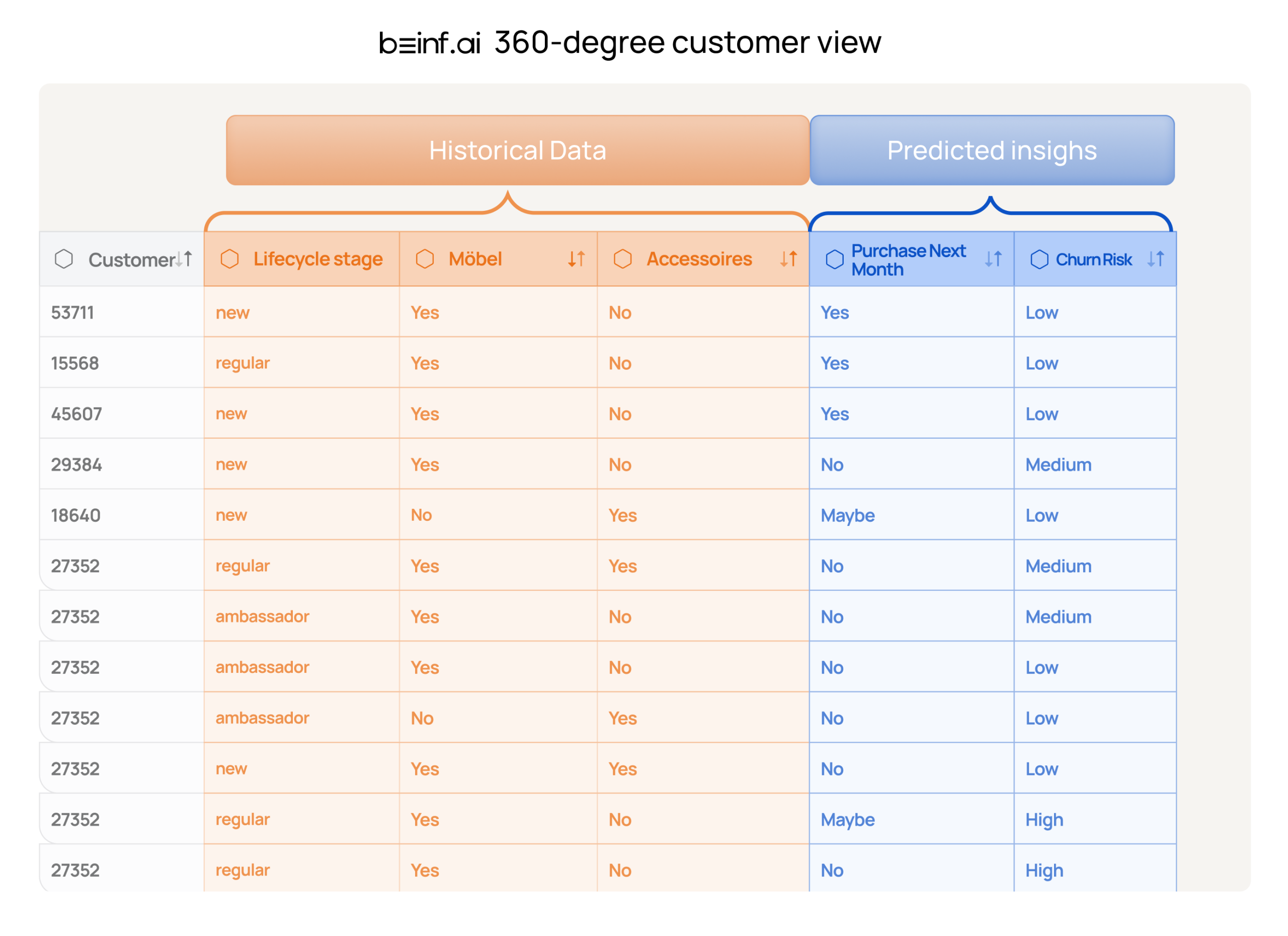
Für jeden Kunden haben wir einfache Indikatoren berechnet, die sein Einkaufsverhalten beschreiben.
Diese Indikatoren helfen dem Modell, den Unterschied zwischen aktiven und inaktiven Kunden zu verstehen.
Wir haben das Modell darauf trainiert, eine Frage zu beantworten: Wird dieser Kunde in den nächsten 3 Monaten etwas kaufen?
Wir haben uns für 3 Monate entschieden, weil die Leute selten Möbel kaufen. Betrachtet man einen kürzeren Zeitraum wie einen Monat, kauft fast niemand etwas. Es gibt nicht genügend Daten, um daraus zu lernen. Drei Monate liefern dem Modell genügend Beispiele tatsächlicher Käufe, um Muster zu erkennen.
Die ursprüngliche Idee war, 1.000 bis 3.000 Kunden zu finden, die definitiv kaufen würden, und sich auf diese zu konzentrieren. Doch eine ehrliche Datenanalyse ergab ein anderes Bild.
Bei einem Kundenstamm von 105.000 ist der Anteil derjenigen, die kurzfristig kaufen werden, sehr gering. Verhaltenssignale waren begrenzt und beschränkten sich im Wesentlichen auf die Kaufhistorie. Daher war es statistisch schwierig, zuverlässig zu ermitteln, wer im Bereich von 1.000 bis 3.000 Personen kaufen wird.
Zunächst versuchten wir, die 1.000 wahrscheinlichsten Käufer zu ermitteln. Die Daten zeigten jedoch, dass es schwierig ist, genau vorherzusagen, wer die Käufer sein werden. Wille Der Kauf gestaltet sich schwierig, da Verhaltenssignale nur begrenzt verfügbar sind.
Wir haben die Strategie geändert zu ausgenommen Nichtkäufer. Obwohl die Käufersuche schwierig ist, identifizierte das Modell mit einer Genauigkeit von 99% Personen, die kein Kaufinteresse hatten. Durch die gezielte Entfernung dieser inaktiven Segmente konnten wir die Mailingliste deutlich verkleinern.

Wir haben die inaktiven Kunden aus der Mailingliste entfernt. Jetzt erhalten nur noch Kunden, die potenzielles Interesse zeigen, ein Schreiben. Die nächste Kampagne reduzierte die Anzahl der versendeten Briefe von 105.000 auf nur noch 20.000.